
What are third-party funds (derdengelden)?
Third-party funds are monies that an intermediary, such as a notary or collection agency, temporarily manages on behalf of someone else. This often involves money intended for third parties, which is held in a separate account to protect the interests of all parties involved. In this article, you will read everything about what third-party funds are, how they work, and why they are important. This system offers protection to all parties and ensures that payments are handled transparently and securely.
Examples of third-party funds:
- Notary: During the sale of a house, the notary receives the purchase price in a third-party account and subsequently pays it out to the seller.
- Collection agency: In collection trajectories, collection agencies receive payments which they then transfer to their clients.
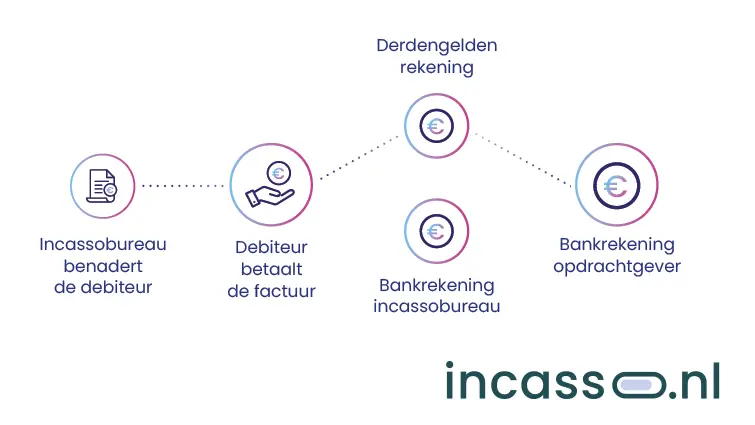
Who manages third-party funds?
Third-party funds are managed by intermediaries who are subject to strict rules and supervision. Below are the key managers and their roles:
The role of a notary
Notaries manage third-party funds in a special third-party account, ensuring the money remains separate from their own assets. This prevents creditors of the notary from laying claim to this money in the event of bankruptcy.
Third-party funds in collection trajectories
Collection agencies receive payments from the clients of their principals (debtors) and keep these in a third-party account before transferring them to the principal. In this way, the collection process and the administrative handling of collected amounts remain completely transparent.
The role of a third-party funds foundation (stichting derdengelden)
Many organizations use an independent third-party funds foundation to keep the management of these funds completely separate from their operational activities. This prevents companies from using other people's money for their own purposes.
Why are third-party funds important?
Third-party funds are crucial for trust and transparency in financial and legal transactions. Some reasons why they are important:
- Protection of all parties: By keeping third-party funds in a separate account, they remain protected against potential creditors of the manager.
- Legal obligation: For many sectors, such as collection agencies, managing third-party funds is a legal requirement.
- Avoiding fraud: Keeping third-party funds separate prevents abuse and ensures a controlled process.
Frequently asked questions about third-party funds
How long may third-party funds be held?
The exact duration depends on the nature of the transaction. In most cases, third-party funds are transferred to the beneficiary as soon as possible. During legal proceedings, this may take longer. At incasso.nl, collected amounts are forwarded immediately, allowing clients to have access to the money quickly.
What happens if the manager goes bankrupt?
Because third-party funds are managed in a separate third-party account, they remain outside the bankruptcy of the manager. Creditors of the manager cannot make any claim on these funds. In this way, collected invoice amounts are always protected, ensuring they always benefit the client.
Want to know more?
Do you have questions about collecting and managing third-party funds, or are you looking for expert advice? Contact us! Our collection specialists are ready to help you with all your questions regarding third-party funds and financial transactions.
Ready to submit your invoice?
Do not let unpaid invoices hinder your company's finances. With the incasso.nl online application, you can initiate a professional collection trajectory in no time, without complicated contracts or legal jargon.
Do you have a specific situation or would you like to consult with a specialist first?
Please contact us at 0348-486425.
